
The Situation
4,500 employees. 16 gates. 4 guards. The math did not work.
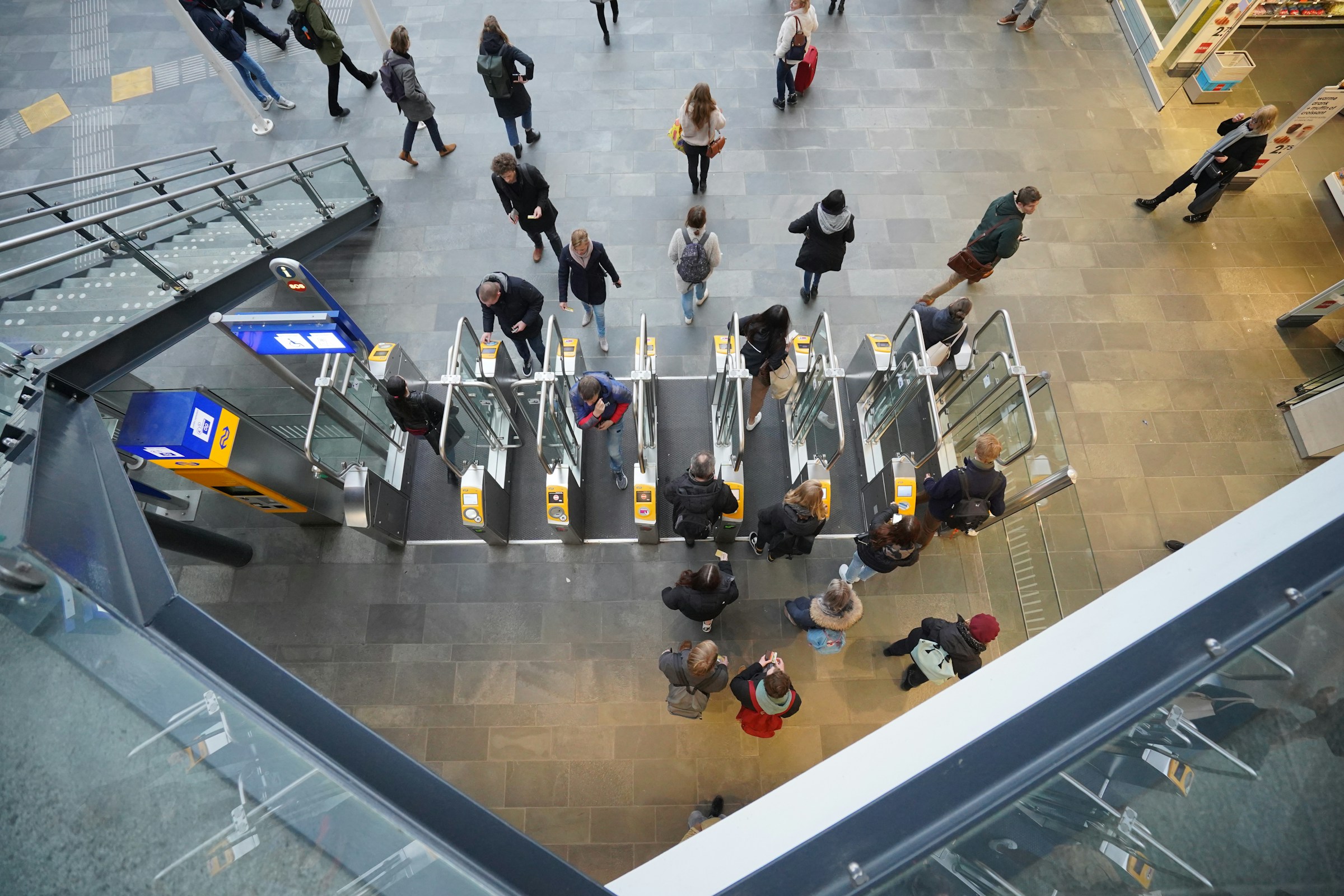
A Fortune 50 company occupied a 40+ story high-rise with a single gated entry point. During peak hours, more than 4,500 employees moved through 16 security gates. Four security guards were expected to compare employee badge photos to people walking through four turnstiles in real time.
In practice, that level of manual verification was impossible to perform accurately at peak volume. The issue was not that the security team lacked effort. The workflow itself generated too much signal for people to process manually. The result was a high-noise environment where the human verification layer could not scale with traffic volume.
What We Did
We implemented a facial-recognition-based second-factor authorization system.
entropy forge reviewed the physical access monitoring workflow and built a system that filtered routine cases automatically, reserving human review for the smaller set of uncertain matches.
Review the physical access monitoring workflow
We mapped how verification worked in practice at peak volume, identified where the human layer was failing under load, and defined what a more reliable workflow would look like.
Implement multi-photo capture on approach
The system captured multiple photos of employees as they approached the turnstile, before badge presentation. This gave the verification system enough signal to make a reliable comparison.
Compare against company photo and route by confidence threshold
After badge presentation, the system compared the captured images against the employee's company photo. Matches above an 83% confidence threshold passed automatically. Only the remaining exceptions were routed to security personnel for manual review.
Result
Security staff focused where their attention mattered most.
- 83% reduction in manual verification noise.
The system absorbed the routine load automatically, reducing overall manual verification work by 83% and freeing security staff to focus on real exceptions.
- Shifted security staff from continuous screening to exception handling.
Instead of forcing staff to manually inspect every entrant, the workflow filtered routine cases and reserved human review for the smaller set of uncertain matches.
- A verification workflow that scaled with traffic volume.
The system replaced a human layer that could not keep up with peak volume with one that handled the routine load automatically and consistently.

Why This Matters
The fix was not "work harder." The fix was to redesign the workflow.
The original workflow depended on humans doing more real-time comparison work than the environment allowed. This is a strong example of operational tooling improving workflow performance — the system absorbed the routine load and people handled the exceptions.
When humans are being asked to do what the system should already filter, the answer is not more effort. It is a better workflow.
Get Started
Have a workflow where humans are being asked to do what the system should already filter, route, or verify?
Request a Workflow Assessment and bring us the process where manual review has become the bottleneck.
- Focused on one high-friction workflow
- Diagnostic + implementation oriented
- Built around your current systems
- Not a long strategy engagement
Or call us directly at +1 (425) 954-3051